
Spray tanning is one of the most profitable beauty services in New Zealand relative to training investment. The course is among the shortest professional beauty qualifications available, the equipment cost is manageable, the product cost per treatment is low, and Kiwi client demand is strong year-round — driven by a culture that balances appreciation for a golden tan with awareness of UV skin damage risks. New Zealand has one of the highest melanoma rates in the world, and the consistent health messaging around sun safety has driven sustained demand for professional spray tan alternatives for decades.
For practitioners looking to generate beauty income quickly or add a high-margin service to an existing menu, spray tanning is one of the most compelling options available in the New Zealand market. This guide covers what a professional spray tan course teaches, how online training works, what equipment you need, and what you can realistically earn as a Kiwi spray tan technician.
What Does a Professional Spray Tan Course Cover?
Dihydroxyacetone (DHA) chemistry is the science at the heart of spray tan training. DHA is a sugar-derived compound that reacts with amino acids in the outermost layer of the skin — the stratum corneum — to produce a browning effect that develops over six to twelve hours. Understanding how DHA works, what affects colour development (skin pH, barrier products, DHA percentage, development time, and post-application skincare), and how to adjust application for different skin types and desired depths is core professional knowledge that separates qualified technicians from anyone who has watched a YouTube tutorial. Healthline provides a well-cited overview confirming that DHA-based spray tanning is safe for skin contact when applied correctly — a reassurance that helps address client hesitation and reinforces the value of professional training over DIY application.
Solution formulation knowledge covers the range of professional products: DHA percentage (eight to twelve per cent being the most common working range for the NZ market), bronzer content for immediate visual guidance during application, rapid development formulations that allow showering in one to four hours, and organic and vegan formulations increasingly requested by environmentally conscious New Zealand clients.
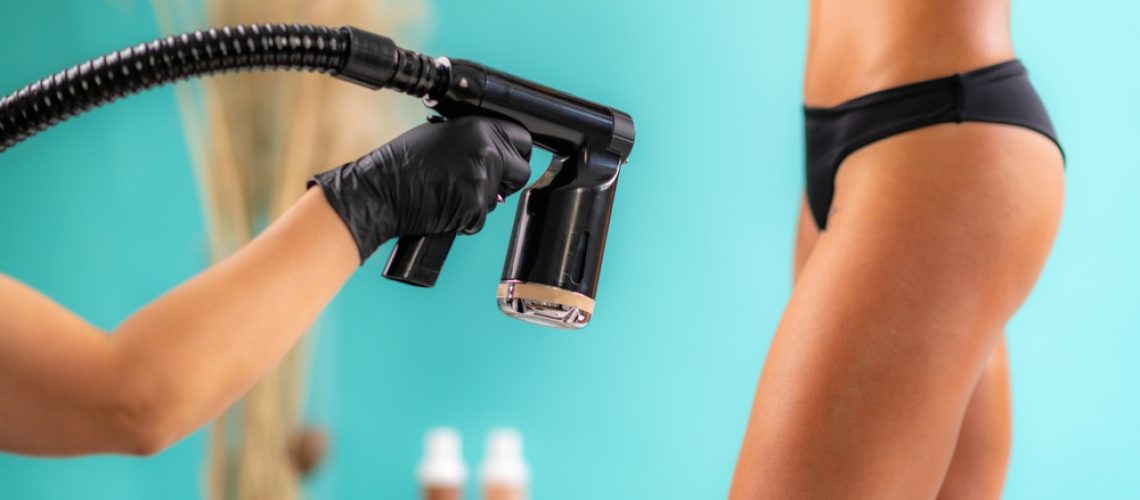
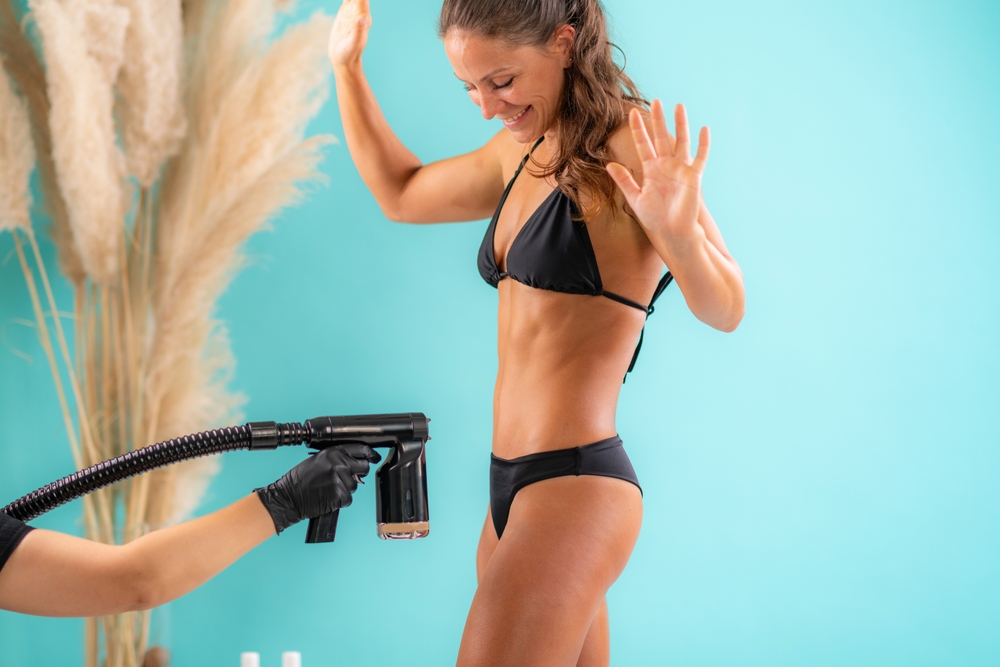
Equipment operation covers HVLP machine setup and pressure calibration, correct spray gun distance and angle for different body areas, client positioning sequence for full and even coverage, and the cleaning and maintenance protocol that extends equipment life. Application technique is taught in a systematic body area sequence. Allure covers the consumer side of achieving a natural tan result — understanding what clients attempt at home before booking a professional helps you clearly articulate the advantages of professional application in your marketing.
Health and safety covers inhalation prevention (masks and ventilation), eye contact avoidance, skin sensitivity assessment and contra-indications, correct product storage and shelf life management, and the aftercare protocol that maximises result longevity and client satisfaction. Client education — the pre-tan preparation instructions and post-tan care guidance that determine whether a result looks natural and lasts well — is covered as both professional knowledge and the client communication that reduces callbacks.
The New Zealand Spray Tan Market
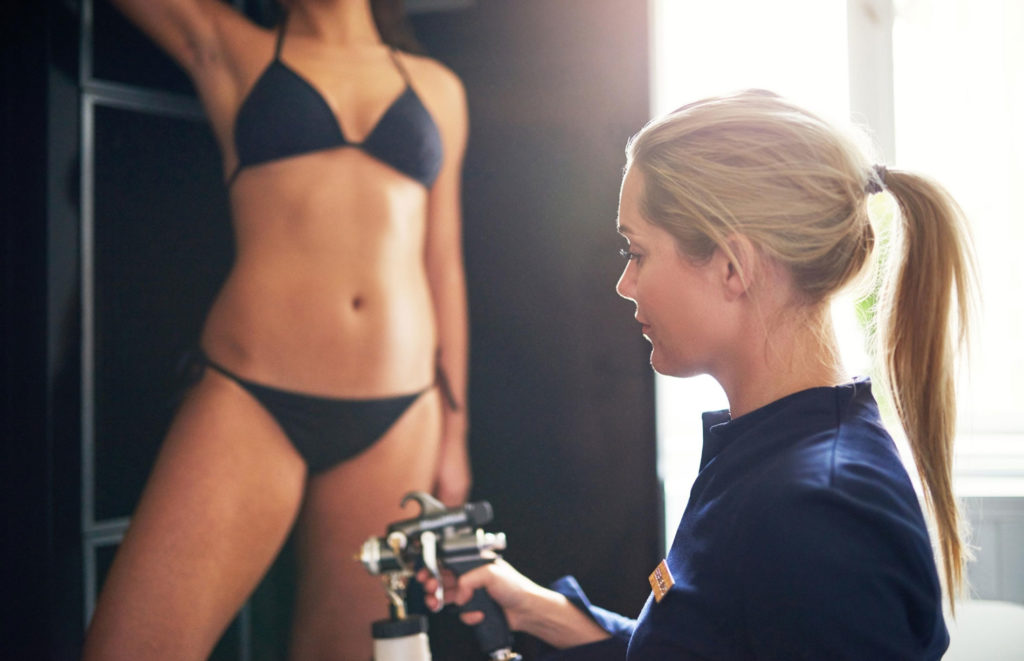
The NZ spray tan market has specific characteristics that shape how a spray tan business is built. Summer demand is intense and predictable — the weeks before Christmas and New Year, the late January to February high summer period, and the October through November spring season generate appointment volumes that significantly exceed available technicians in many markets. Pre-holiday bookings — clients preparing for Pacific Island, Bali, or other warm-weather trips — are particularly reliable revenue during the Auckland and Wellington winter months when natural tanning is impossible.
Mobile spray tan is the dominant business model for independent NZ spray tan technicians. The equipment is portable and manageable, domestic properties in suburban New Zealand provide adequate space for a pop-up tent setup, and clients strongly value the convenience of having the treatment delivered at home — avoiding the need to dress and travel with a fresh tan that has not yet been showered off.
How Long Does a Spray Tan Course Take?
Most online spray tan courses in New Zealand can be completed in two to four weeks of consistent study — one of the shortest professional beauty qualifications available. Technique develops quickly with focused practice; most students are ready for their first paid clients within three to five weeks of beginning training.
What Can You Earn?
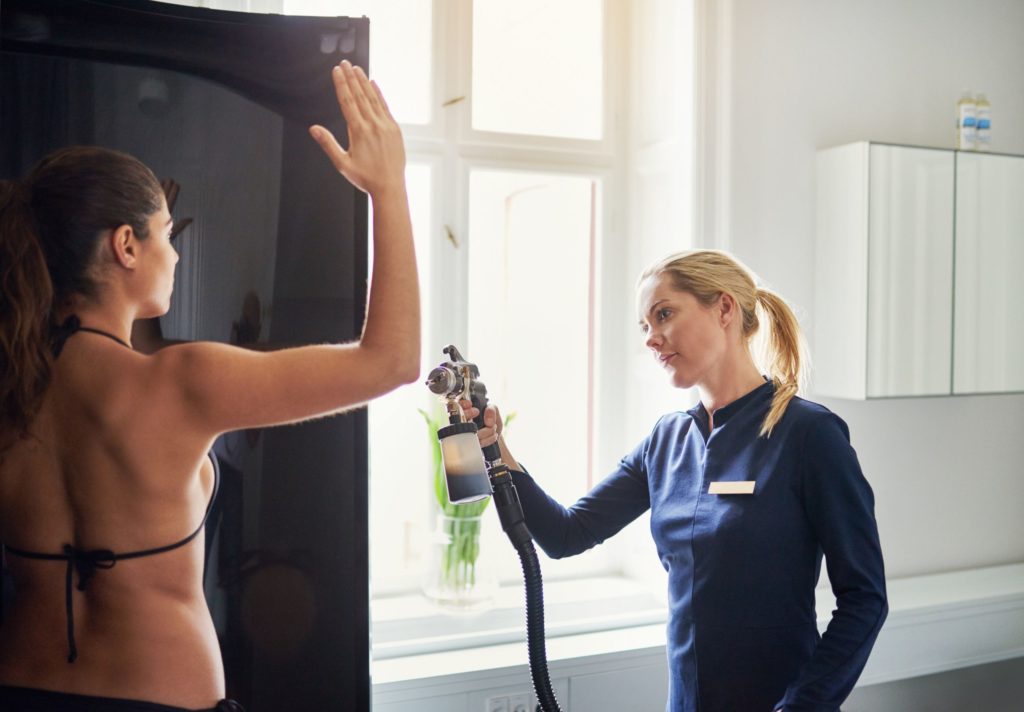
Spray tan treatments in New Zealand are priced at NZD $50 to $90 for a standard application, with mobile technicians charging at the upper end plus a travel supplement of NZD $10 to $20. The treatment takes twenty to thirty minutes, giving spray tan one of the best revenue-to-time ratios in Kiwi beauty. Group bookings — hen parties, wedding parties, prom groups — generate NZD $300 to $600 in a single visit.
For career and income data for beauty therapists in New Zealand, Careers New Zealand provides a useful overview of typical earnings, work settings, and career progression for beauty professionals — useful context for pricing your spray tan services and planning your career model.
For current beauty roles across NZ, Seek NZ lists positions that provide benchmark employed market data alongside your self-employed spray tan practice.
Our Certificate in Spray Tanning covers every aspect of professional spray tan application and business setup. For the business launch perspective, our article on running a spray tan business: everything you need to know is essential reading. All training is at New Zealand Beauty School.