
New Zealand’s wedding, events, and beauty industry generates consistent, year-round demand for skilled hair stylists — and right now, that demand is outpacing the supply of qualified practitioners in many markets across the country. From Auckland bridal studios to Queenstown destination weddings, from Wellington fashion events to Christchurch blow-dry bars, the Kiwi hair styling market rewards practitioners who combine solid technical training with the business skills to market themselves effectively.
For anyone considering a professional hair styling qualification in New Zealand, this guide covers the landscape clearly: what a hair styling course teaches, how online training delivers these skills, how the qualification differs from a full hairdressing apprenticeship, what career paths are available to qualified stylists, and what you can realistically earn in the New Zealand market.

Hair Styling vs Hairdressing: Understanding the Distinction
One of the most common points of confusion for people exploring hair training in New Zealand is the difference between a professional hair styling course and a full hairdressing qualification. Understanding the distinction is important before you invest in training.
A full hairdressing qualification in New Zealand — typically a Level 3 or Level 4 New Zealand Certificate in Hairdressing — covers cutting, colouring, chemical treatments (perming, relaxing, and straightening), and the full scope of hair salon services. It typically takes two to three years to complete through a salon apprenticeship or full-time study at a registered provider. This pathway leads to roles as a qualified hairdresser in a traditional salon environment.
A professional hair styling course is focused on the creative and technical skills of styling — working with hair that is already cut and coloured to create looks using blow-drying, heated tools, setting techniques, and manual skill. The curriculum covers occasion styling, bridal updos, braiding, blowouts, and event styling, but not cutting or colouring. This qualification is completed in weeks to months rather than years, and it produces practitioners who can work as freelance hair stylists for weddings, events, editorial, and mobile blow-dry services.
Many successful Kiwi hair professionals hold both types of qualifications — a full hairdressing qualification for salon work and a complementary hair styling qualification that develops their bridal and event-specific expertise. Others pursue hair styling training alongside beauty therapy qualifications to build a comprehensive wedding and occasion service offering without the full hairdressing pathway.
What Does a Professional Hair Styling Course Cover?
A comprehensive hair styling course in New Zealand covers the technical skills and professional knowledge needed to work across the full range of styling contexts — from high-volume blow-dry bar shifts to multi-bride wedding mornings in remote Marlborough vineyard venues.
Hair anatomy and physiology form the theoretical foundation. You will learn the structure of the hair shaft — the outer cuticle layer, the inner cortex, and the medulla — and how heat, humidity, and mechanical stress affect each component. Understanding why fine hair responds differently to the same blow-dry technique as coarse or chemically treated hair is professional knowledge that allows you to adapt your approach intelligently rather than applying a single method to every client.
Blow-dry technique is the foundational practical skill. A professional blow-dry — smooth, voluminous, long-lasting, appropriate to the client’s hair type — requires correct sectioning, brush selection, heat direction, and tension calibration developed through genuine practice rather than simply watching tutorials. The blow-dry you deliver sets the quality ceiling for everything else you offer clients.
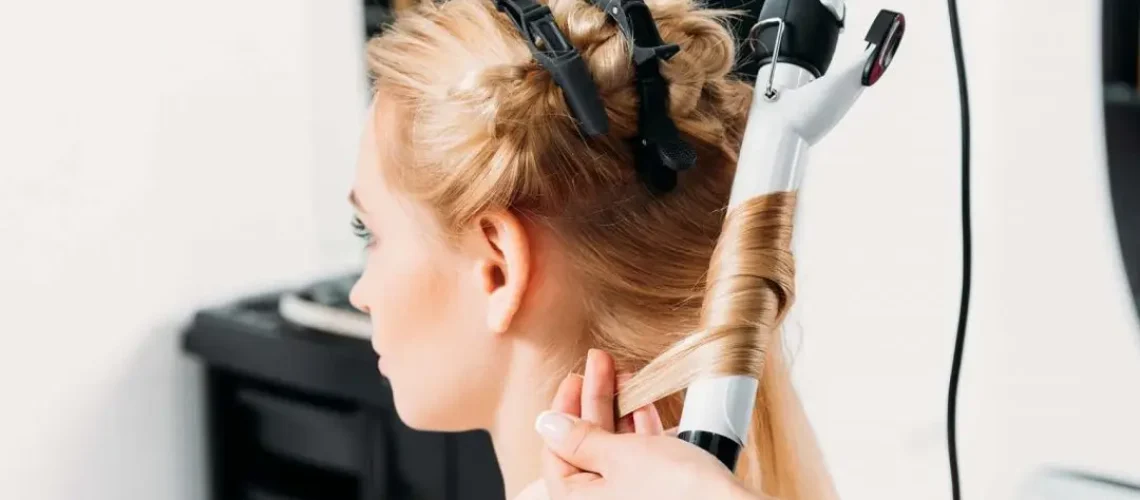
Heated tool technique covers the full range of tools: curling wands and tongs in multiple barrel sizes, straightening irons for both sleek and wave effects, hot rollers, and heated brushes. Each tool produces a different result on different hair types, and understanding the science of temporary bond manipulation — how heat affects the hydrogen bonds that determine hair shape — allows you to choose and use tools precisely for each client and look.
Occasion and bridal updo work is a substantial practical component. Classic chignons, French twists, low barrel rolls, modern textured updos, and braided bridal styles are taught in detail, with particular attention to the techniques that make styles last through an eight-hour wedding day in the New Zealand climate — including summer humidity in Auckland and the coastal winds common to many popular wedding venues.
Braiding technique is covered from foundational three-strand through to fishtail, Dutch, and waterfall braids. These techniques have become increasingly requested for both bridal and everyday styling across the New Zealand market, driven by social media visibility.
Business and professional practice content covers client consultation, pricing for different markets across New Zealand, building a portfolio and social media presence, working with wedding coordinators and venues, and managing the logistics of mobile styling work. Careers New Zealand provides a useful overview of the hairdressing and hair styling career landscape in NZ — including typical income ranges, work settings, and the distinction between styling and full hairdressing qualifications that informs how you position your services.
How Long Does a Hair Styling Course Take?
A comprehensive online hair styling course in New Zealand can typically be completed in six to fourteen weeks of consistent study. The theoretical content — hair anatomy, product knowledge, tool science — typically takes two to three weeks. The practical development component — developing blow-dry consistency, updo construction, and braiding technique — requires deliberate practice on a range of volunteer models and cannot be shortcut by studying faster.
Bridal updo work in particular takes the most practice time to reach professional standard. The ability to construct a symmetrical, well-finished style that holds through a full wedding day is not developed in a handful of sessions. Plan for ten to fifteen practice updos on diverse hair types before your first paid bridal booking.
Career Paths for Professional Hair Stylists in New Zealand
Bridal and events styling is the primary career path for most qualified hair stylists across New Zealand who do not hold a full hairdressing qualification. Wedding hair styling in the New Zealand market is in strong and consistent demand, with the destination wedding market — particularly in Hawke’s Bay, Marlborough, Central Otago, and Waiheke Island — attracting bookings from both domestic and international clients year-round.
Blow-dry bar services are a growing format in Auckland, Wellington, and Christchurch. Session styling for editorial, commercial photography, and fashion in Auckland’s advertising and media market provides project-based income for stylists building a creative portfolio. Allure covers the global hair styling trends that flow into the New Zealand market — staying current with this content helps you understand the styles your clients are referencing and ensures your portfolio reflects the contemporary aesthetic that attracts quality bookings.
What Can You Earn as a Hair Stylist in New Zealand?
Bridal hair styling in New Zealand is typically priced at NZD $180 to $350 for the bride, with bridal party members at NZD $80 to $140 per person. A full wedding morning for a party of six generates NZD $600 to $1,000 from a single booking. Mobile blow-dry services charge NZD $50 to $90 per appointment. In Auckland and Wellington, premium positioning for bespoke bridal styling reaches NZD $400 and above for the bride.
For guidance on what healthy and well-maintained hair looks like — context for advising clients on hair health before their treatments — Healthline provides clinically reviewed hair health guidance that reflects what your clients read before appointments, helping you align your professional advice with the information they already have.
For employment opportunities across the NZ hair and beauty sector, Seek NZ lists current hair stylist roles across New Zealand — a useful benchmark for understanding the employed market rate and the types of positions available as your career develops.
Our Certificate in Professional Hair Styling covers the full range of professional styling techniques for the New Zealand market. For a broader overview of starting a beauty business after training, our guide on how to start your beauty business after completing an online beauty course is essential reading. All courses are available at New Zealand Beauty School.