

Nail technology is one of the most enduringly popular beauty specialisations in New Zealand. From Auckland’s competitive nail bar market to home-based nail studios servicing loyal suburban client bases across the North and South Islands, the demand for skilled nail technicians in New Zealand is consistent and broad. The combination of high-frequency repeat bookings, premium pricing for specialist services — particularly acrylic extensions and detailed nail art — and the low overhead costs of a well-equipped home studio makes nail tech one of the most financially sustainable beauty careers for Kiwi practitioners.
This guide covers what a professional nail tech course in New Zealand teaches, the systems and services you will be qualified to offer, how online training delivers the practical skills, how long qualification takes, and what a realistic career and earnings picture looks like in the New Zealand market.

What Does a Nail Tech Course Cover?
A comprehensive nail tech course in New Zealand goes substantially beyond the application steps of a single service. The programme is designed to produce practitioners who understand the science behind their materials, can work safely across a full range of client nail types, and have the business foundation to build a sustainable nail practice from their first client.
Nail anatomy and the nail growth cycle are the foundational theory. You will learn the precise structure of the nail unit — plate, bed, matrix, hyponychium, cuticle, and surrounding skin — and why understanding this anatomy matters for safe product application and informed client advice. The growth cycle determines how quickly nails grow (typically two to four millimetres per month, varying with age, health, and nutrition) and why fill appointments are timed the way they are.
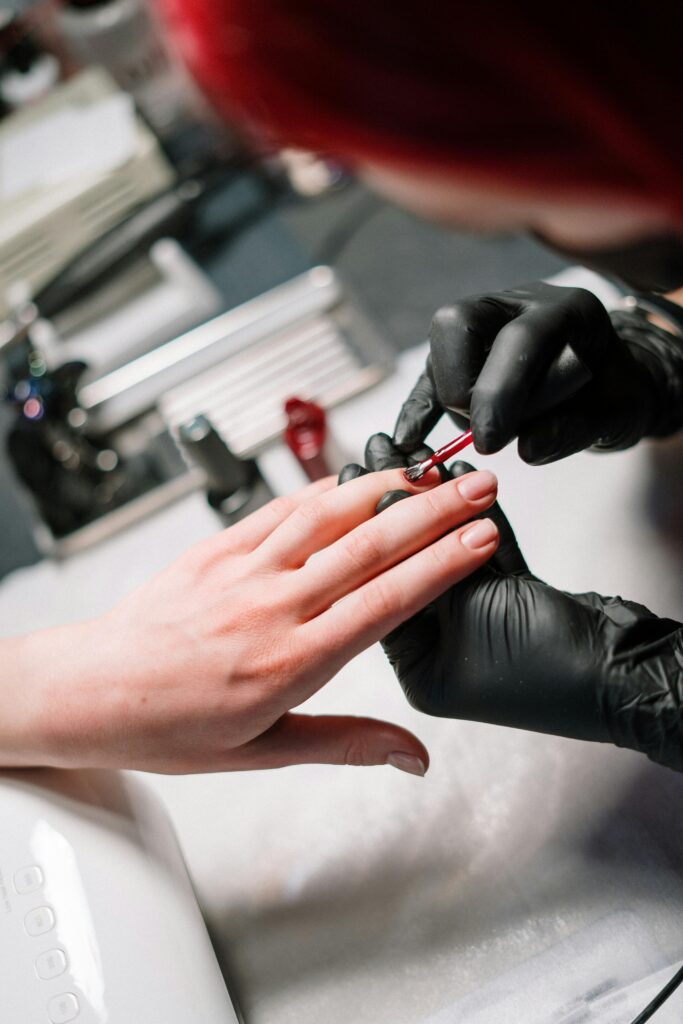
Gel polish application is typically the first practical skill developed. Correct nail preparation — dehydration, primer, base coat — is the foundation of adhesion and retention; skipping or rushing these steps is the primary cause of gel polish lifting. You will learn the correct curing protocol for UV and LED lamps, streak-free application technique, and the safe soak-off removal method that preserves natural nail integrity. For a sense of what NZ clients are looking for from their nail tech, Allure is one of the most widely read nail references globally and reflects the trends — nail art styles, extension shapes, finish types — that drive client demand in the New Zealand market alongside local social media influences.
Hard gel and builder gel application covers the structural overlay systems used to add strength to natural nails and create the canvas for extensions and nail art. Builder gel — particularly Builder In A Bottle (BIAB) formats — has seen significant growth in the New Zealand market as clients move away from traditional hard gel overlays toward more flexible, natural-nail-friendly systems.
Acrylic application covers the liquid and polymer system that remains the dominant extension method for clients who want significant length. Bead consistency, placement timing, shaping technique, and filing protocol are all covered in detail, alongside the chemistry of the monomer and polymer system and the health and safety requirements — particularly ventilation standards — specific to acrylic work. Healthline provides a clinically reviewed overview of nail care and health that reflects what your clients read before appointments — practitioners who understand this content can advise with credibility on nail health questions that arise in consultation.
Nail art fundamentals introduce the creative component of the qualification: simple freehand designs, nail stamping, foil application, gradient and ombre technique, and chrome powder application. These techniques add immediate upsell potential to your service menu from your first client.
How Long Does a Nail Tech Course Take in New Zealand?
A comprehensive online nail tech course in New Zealand covering gel, builder gel overlay, and acrylic application typically takes eight to fourteen weeks of consistent study. Acrylic application is the skill that requires the most deliberate practice before professional-standard results are consistently achievable — plan for the longer end of this range if you are starting without any previous nail experience.
What Can You Earn as a Nail Tech in New Zealand?
Gel polish manicures in New Zealand are priced at NZD $40 to $70; gel overlays at NZD $55 to $90; acrylic full sets at NZD $65 to $110 in regional markets and NZD $90 to $150 in Auckland. Nail art add-ons range from NZD $10 to $60 depending on complexity. Self-employed nail technicians with full appointment books in competitive New Zealand markets earn NZD $50,000 to $90,000 annually.
For career and salary data for beauty therapists and nail technicians in New Zealand, Careers New Zealand provides a useful overview of employment settings, typical income ranges, and career progression paths for nail and beauty professionals across the country.
For current nail technician roles across NZ, Seek NZ provides benchmark employed market data that helps you understand the full landscape of nail career options and price your own services competitively relative to the NZ market.
Our Certificate in Nail Technology is the comprehensive starting qualification for a Kiwi nail career. For a thorough guide to nail business setup costs, our article on nail technicians’ equipment essentials and setup costs revealed is recommended reading. All nail training is at New Zealand Beauty School.